Japanese beetles hatch early in the summer, typically around July 4th, leaving most of the season for them to cause plant damage to forests, farms, flowers, ornamental trees, and shrubs. If you see an iridescent copper and green colored beetle, contact us to consider treatment options for your clients. Here are our recommendations for this […]
Read More

Do you live on the west coast? If so, your trees may be at risk for Bronze Birch Borer (BBB) and scale. If you’re an arborist, landscape professional, or home owner, you should be aware of the solutions available to combat these nuisances. It’s not too late to treat this summer and fall! By protecting […]
Read More

Though it’s almost August, there will still be plenty of hot weather ahead for many of us. For those of us treating trees, that means the battle against heat and humidity is on, and there are certain factors to consider now that may affect the success of your treatment. If you’re safeguarding against pests this […]
Read More
Monica Munoz, a member of Arborjet’s Marketing and Inside Sales team, shared her impressions of the Landscape Ontario Congress. The show is Canada’s premier horticultural event and was held at the Toronto Congress Centre recently, January 12th though January 14th. The show welcomed 13,000 attendees and over six hundred international exhibitors, including Arborjet. Fun Promoting […]
Read More

Rugose Spiraling Whitefly infestation is easy to identify due to the sticky, sugary and messy “honeydew” the insect produces. Black sooty mold may also grow on the honeydew, drawing further attention. The most obvious sign of an infestation is seeing the flies themselves as well as the white spiraling patterns they make on the bottoms […]
Read More
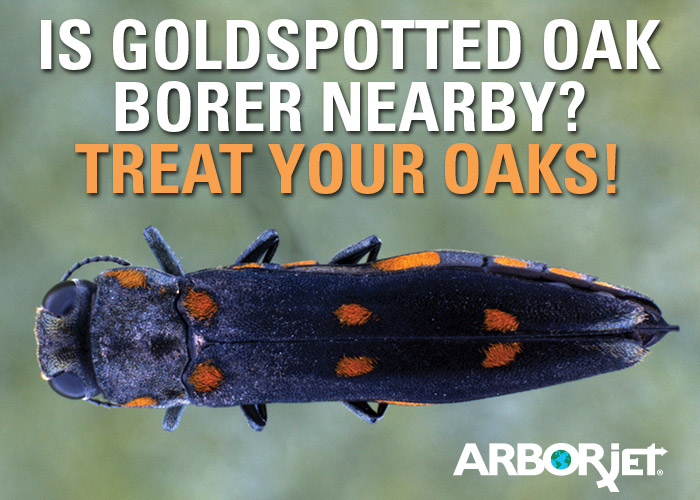
The Goldspotted Oak Borer (GSOB) is a flat-headed borer that was originally found around the San Diego, California area. GSOB are currently known to attack three species of oak: coastal live, canyon live, and California black. Adult GSOB are usually 10mm in length and have bullet-shaped black bodies with gold spots on their sides. Oaks with […]
Read More
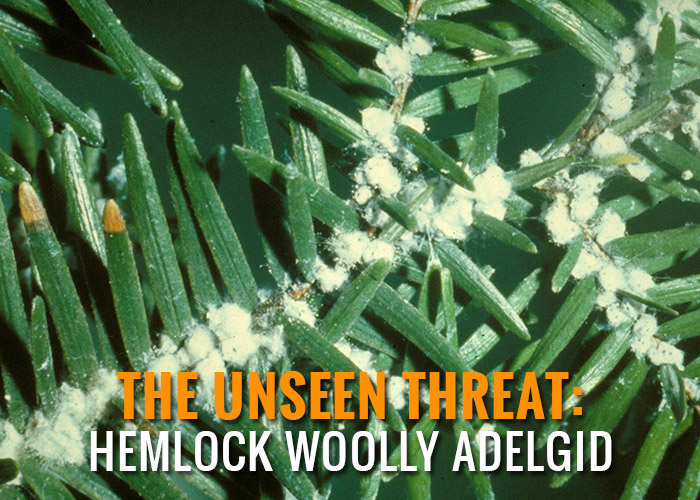
The Hemlock Woolly Adelgid (HWA) is a tiny, piercing and sucking insect, unseen with the naked eye that feeds on hemlock twigs at the bases of the needles. HWA is an invasive species from Asia which has infested the US East Coast hemlock forest from New Hampshire to Georgia, inhibiting twig growth throughout. It has […]
Read More
Thrips are slender, tiny insects (generally 1 mm or less) that often have fringed wings. Nymphs lack wings, are elongate, and range in color from off-white or yellow to brown or black. Some common names for thrips include thunderbugs, storm flies, thunderblights, storm bugs, and corn lice. Most thrips feed by sucking out cell contents […]
Read More